What is the real story behind Halloween traditions? People searching for halloween history and trivia want the facts on how customs like costumes and candy collecting developed from earlier harvest festivals. This guide pulls together the key shifts in practices across regions, including the move from turnip carvings to pumpkin versions in the US. Readers will find specific details such as the use of hollowed vegetables with three to five facial cuts and the spread of apple-bobbing games that require at least a half-dozen participants. Trivia angles cover exact origins of phrases and the shift in date observance tied to calendar adjustments. The content also notes how classroom or party quizzes often focus on five to seven core facts to keep sessions under thirty minutes. One natural extension appears when discussing period-style clothing made from wool or linen blends.
👉 This pillar serves adults planning Halloween trivia nights for ten to twenty guests or teachers preparing lessons for middle-school classes of twenty-five students.
What are the ancient roots of Halloween?
Early observances centered on a festival marking the end of harvest with bonfires built from nine types of wood. Participants wore animal hides over their shoulders during nighttime gatherings. The practice involved leaving food offerings on doorsteps in sets of three bowls. Over time these customs blended with later church observances that added candle lighting inside hollowed root vegetables. Concrete records show groups of children collecting soul cakes in exchange for prayers, a routine that used small round breads measuring three inches across. This section details five distinct regional variations in mask construction using straw and fabric scraps.
How did Halloween reach America?
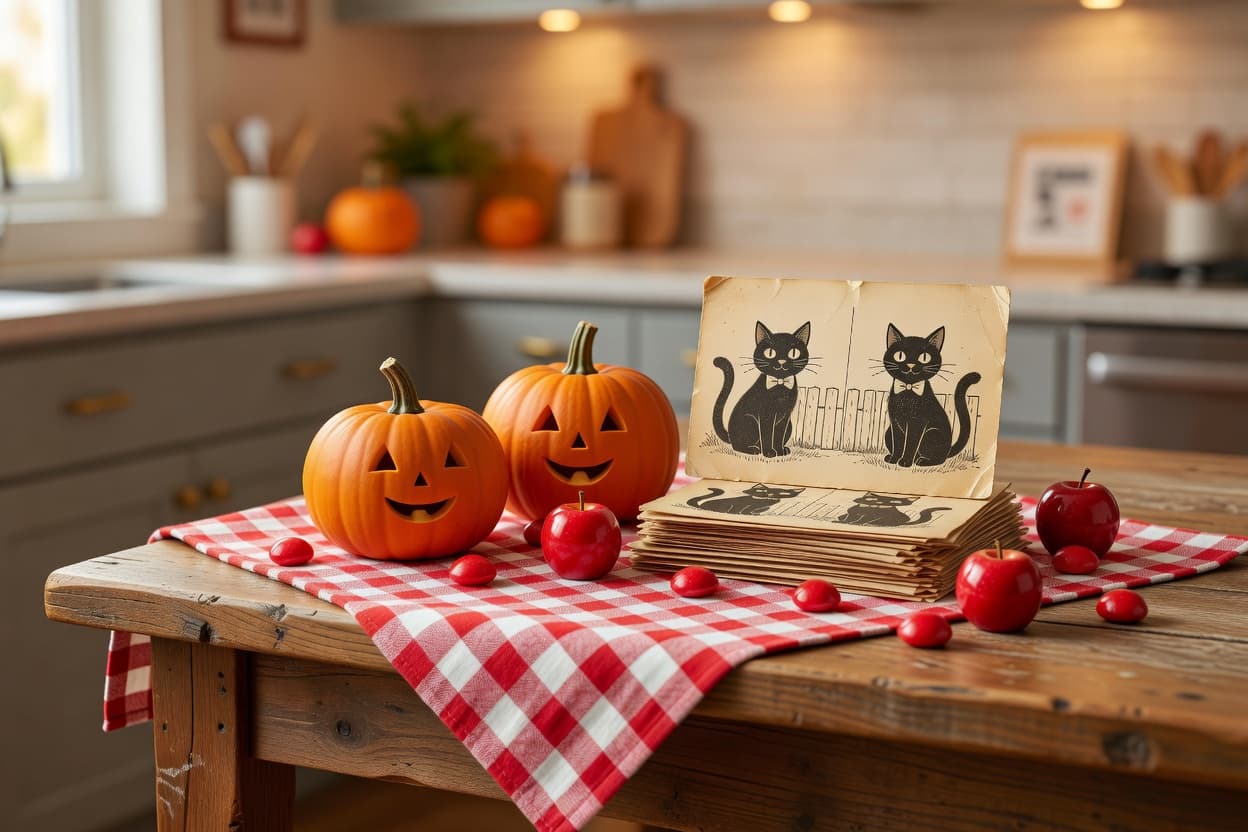
Irish and Scottish settlers carried the customs across the Atlantic in the 1800s using ships that held up to two hundred passengers per crossing. They adapted the turnip lantern tradition by switching to larger native pumpkins that could be carved with two to four simple shapes. Community gatherings featured games such as snapping apples from strings hung at eye level for groups of eight. By the early twentieth century printed postcards showed black cats and witches on brooms in sets of twelve designs. The section lists eight specific items that appeared in the first American newspaper mentions of the holiday.
Why do people wear costumes on Halloween?
Costumes began as disguises to avoid recognition by spirits believed to roam on the final night of October. Early versions used old coats turned inside out and masks cut from paper with eye holes spaced two inches apart. In the US the practice expanded to include store-bought outfits made from cotton and felt in the 1930s. Modern recreations often combine three layers such as a base shirt, vest, and hat. If you are building a simple version with those materials, shop the look at fabric outlets for orange and black yardage to match classic styles.
What are the most common Halloween trivia questions?
Quizzes typically open with five questions on date origins, followed by three on costume history and two on candy sales figures. One standard item asks how many pounds of candy are purchased nationwide each season, with answers ranging in the millions. Another covers the exact number of seeds inside an average carving pumpkin, usually between two hundred and three hundred. Party hosts prepare answer sheets in sets of ten questions to fit a forty-minute round. The section supplies eight ready-to-use questions with short factual replies.
How has the date of Halloween stayed fixed?
The thirty-first of October remained constant because it aligned with the eve before a major church feast day. Calendar reforms in the sixteenth century shifted some holidays by eleven days yet left this observance untouched. Farmers marked the date with harvest festivals that included exactly one large communal meal per household. Records from Scottish parishes list specific games played on that evening involving nuts roasted over open flames. The section notes four ways the date appears in printed almanacs from the 1700s onward.
Better trivia scores
Knowing the five core facts lets players answer correctly on the first try in group settings of eight to ten.
Stronger classroom lessons
Teachers gain three ready examples per topic that fit within a standard forty-five minute period.
Clear party planning
Hosts can prepare eight questions and three games using only household items such as apples and string.
Accurate costume ideas
Readers learn the original three-layer construction method using wool and felt instead of modern synthetics.
How to Get Started, Step by Step
- 1
List five facts
Write down the origin story and the reason for the October date in two short sentences each.
- 2
Gather props
Collect three to five small root vegetables or one pumpkin for a quick carving demo.
- 3
Print question cards
Create ten trivia cards on paper using the examples in the common questions section.
- 4
Test with a partner
Run through the full set once with one other person to time the session at under thirty minutes.
Shop it at Abracadabra NYC, the store behind this list:
Shop Halloween Collectibles →
💡 Most roundups skip the detail that early American newspaper notices listed exactly eight common symbols on printed cards.
Frequently Asked Questions
What is the history of Halloween?+
Halloween grew from an ancient harvest festival that used bonfires and offerings of food. The custom later mixed with church observances that added candle lighting inside carved vegetables. Irish immigrants brought the version with pumpkin lanterns to the United States where it expanded into community games. Records show groups of children collecting small cakes in sets of three. The practices settled into the familiar mix of costumes and candy by the early twentieth century.
Why do we celebrate Halloween on October 31?+
The date marks the evening before a major church feast and aligned with older harvest calendar points. Calendar changes left this observance in place while shifting others by eleven days. Farmers kept the timing for end-of-season gatherings that included one large shared meal. Scottish parish notes list specific nut-roasting games held only on that night. The fixed date carried through printed almanacs into later centuries.
When did Halloween start in America?+
Irish and Scottish arrivals introduced the customs in the nineteenth century aboard ships carrying up to two hundred passengers. They replaced turnips with native pumpkins that allowed larger carvings with two to four cuts. Newspaper mentions grew through the early twentieth century with postcards showing twelve common designs. Community events added apple games for groups of eight. The holiday reached its current scale with widespread candy sales by the 1950s.
Is Halloween pagan or Christian?+
Halloween blends elements from both traditions rather than belonging to one alone. The harvest bonfire and disguise practices trace to earlier seasonal festivals. Church leaders later placed a feast day on the following date and added candle customs inside carved vegetables. The date itself stayed fixed through later calendar reforms. Modern celebrations keep the mix of both older games and later candy distribution.
More Halloween Guides
- Halloween Costume Ideas
- Halloween House Decorating Ideas
- Halloween Jokes and Riddles
- Halloween Makeup and Face Paint Ideas
- Halloween Masks
- Halloween Movies
- Halloween Nail Art
- Halloween Party Ideas
- Halloween Pranks and Gag Gifts
- Halloween Props & Decorations
- Halloween Wigs
- Pet Halloween Costumes
- Pumpkin Carving Ideas
- Trick or Treat Guide