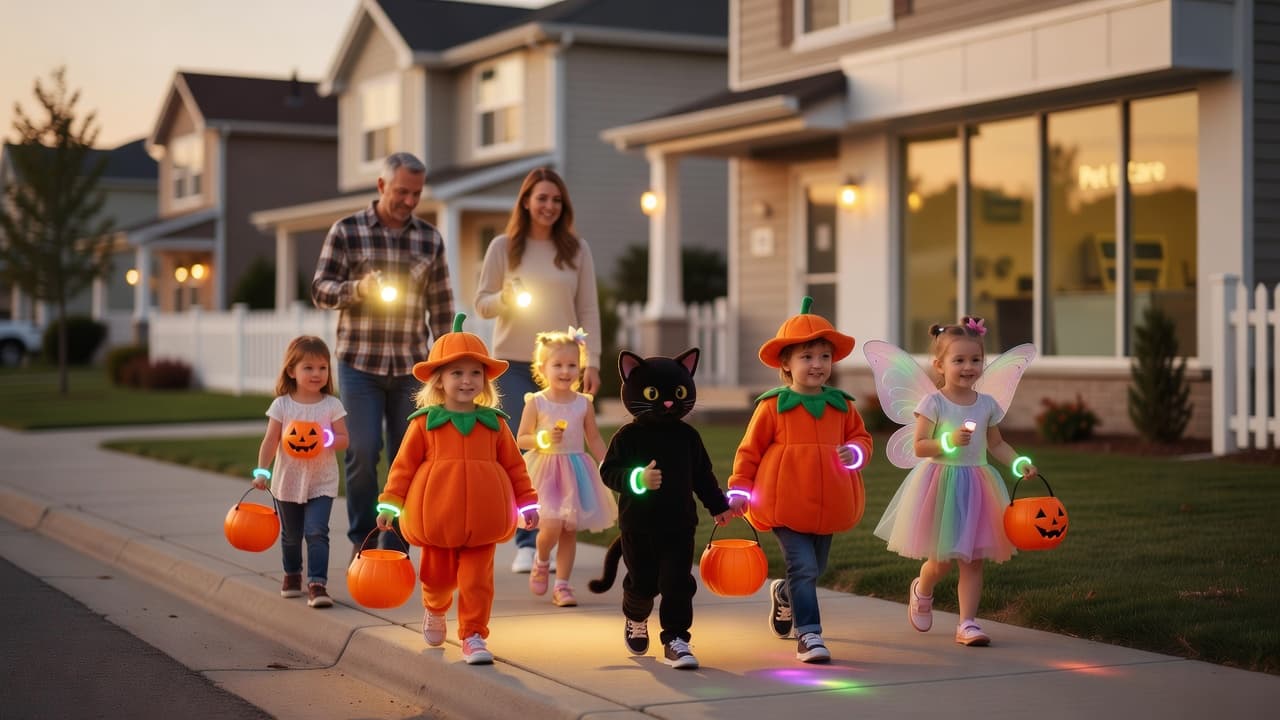
Parents often mix up two approaches: treating every neighborhood like it follows one city-wide clock versus checking the actual block-by-block pacing that changes with streetlight timers and school dismissal times. The first method sends kids out too early when houses are still dark or keeps them waiting on porches after most families have turned off lights. The second method means printing a short list of confirmed start times from three nearby zones and adjusting the route on the fly. This safety guide centers on those real-time choices, from deciding whether to begin at 5:45 or 6:15 to pacing the walk so the last house is reached before 8 PM. It also covers how many pieces of candy to carry per child and which reflective items prevent trips on uneven sidewalks.
What You'll Need
- One printed sheet listing start times for three zip codes
- Two rolls of 1-inch reflective tape
- Four battery-powered LED flashlights with extra batteries
- One small first-aid kit containing 12 bandages
- Six glow bracelets per child
- Three mixed-size bags of individually wrapped candy
what time does trick or treat start
Most areas open between 5:30 PM and 6:30 PM, but the exact minute depends on when the first porch lights turn on in your specific streets. Check the city website or call the non-emergency police line the morning of Halloween to confirm the window rather than guessing from last year. Families who leave at 5:45 often reach ten houses before full dark while those who wait until 6:15 finish closer to 8 PM when many homes close early. Track the number of blocks you plan to cover and allow six minutes per house on average so the group does not get caught after lights go out. Adjust for weather—if rain is forecast, start thirty minutes earlier to avoid slippery sidewalks.
trick or treat hours near me
Hours shift by neighborhood because each block follows its own pattern of when residents finish dinner and flip on exterior lights. Pull up the local police or parks department page and note the three closest zones to your starting point, then mark the earliest and latest times on a small map. In practice this means one street may welcome kids at 5:45 while the next block waits until 6:15. Walk the route once in daylight to count the houses and estimate total time at five to seven minutes per stop including walking between doors. Keep a backup plan for a shorter loop if the group tires or if rain begins.
how to pace your route by start time
Begin at the confirmed opening minute for your first street and move steadily so the last house is reached before most lights turn off around 8 PM. Carry two flashlights per adult and one per child over age eight so everyone can see sidewalk cracks. Count the number of houses you intend to visit and add ten extra minutes for crossing busy intersections. If you notice several homes already dark by 7:30, turn back early rather than pushing further into unlit areas. This pacing keeps the outing under two hours total and prevents fatigue that leads to trips or dropped candy.
safety supplies that match real start times
Instead of DIYing reflective gear from household items, pick up two rolls of 1-inch reflective tape at a hardware store and apply strips to shoes and buckets the night before. Add four LED flashlights with spare batteries so each walker has light even if one fails. Pack six glow bracelets per child to mark the group in low light after 7 PM. A small first-aid kit with twelve bandages covers minor scrapes without needing to cut the night short. These items take under thirty minutes to prepare and directly support the decision to start at 5:45 or 6:15 depending on your printed local hours.
Quick Tips
- ✓Print the local hours list the morning of and cross off any streets that show no lights by 6 PM
- ✓Test all four flashlights with fresh batteries the night before so none fail mid-route
- ✓Set a two-hour timer on your phone when the first doorbell rings to keep the group on pace
- ✓Carry one extra bag of candy in an adult pocket in case a house runs out before you arrive
- ✓Walk the planned blocks once during daylight to spot uneven pavement or missing sidewalk sections
- ✓End the route at the house with the brightest porch light so kids can regroup before heading home
Shop it at Abracadabra NYC, the store behind this list:
Shop Halloween Costumes →
🎯 Print the three-zone start-time sheet the morning of Halloween and apply the reflective tape strips the night before. Begin at the earliest confirmed minute for your first block and keep the two-hour timer running so the outing stays safe and predictable.
💡 The exact minute porch lights go dark on each individual block varies even within the same zip code
Frequently Asked Questions
what time does trick-or-treat start+
Most neighborhoods begin between 5:30 PM and 6:30 PM. Confirm the precise window for your streets by checking the city or police website that morning instead of assuming last year's schedule. Families who start at 5:45 finish closer to 8 PM when many porches go dark, while later starts risk missing houses. Track six minutes per stop including walking time between doors and adjust the route if rain is expected.
trick or treat hours near me+
Hours differ by block because each follows its own dinner and porch-light pattern. Note the earliest and latest times for the three closest zones on a printed map and mark your starting street. This lets you choose a 5:45 or 6:15 launch that matches actual neighborhood pacing rather than a single city rule. Walk the route in daylight once to count houses and keep the total outing under two hours.